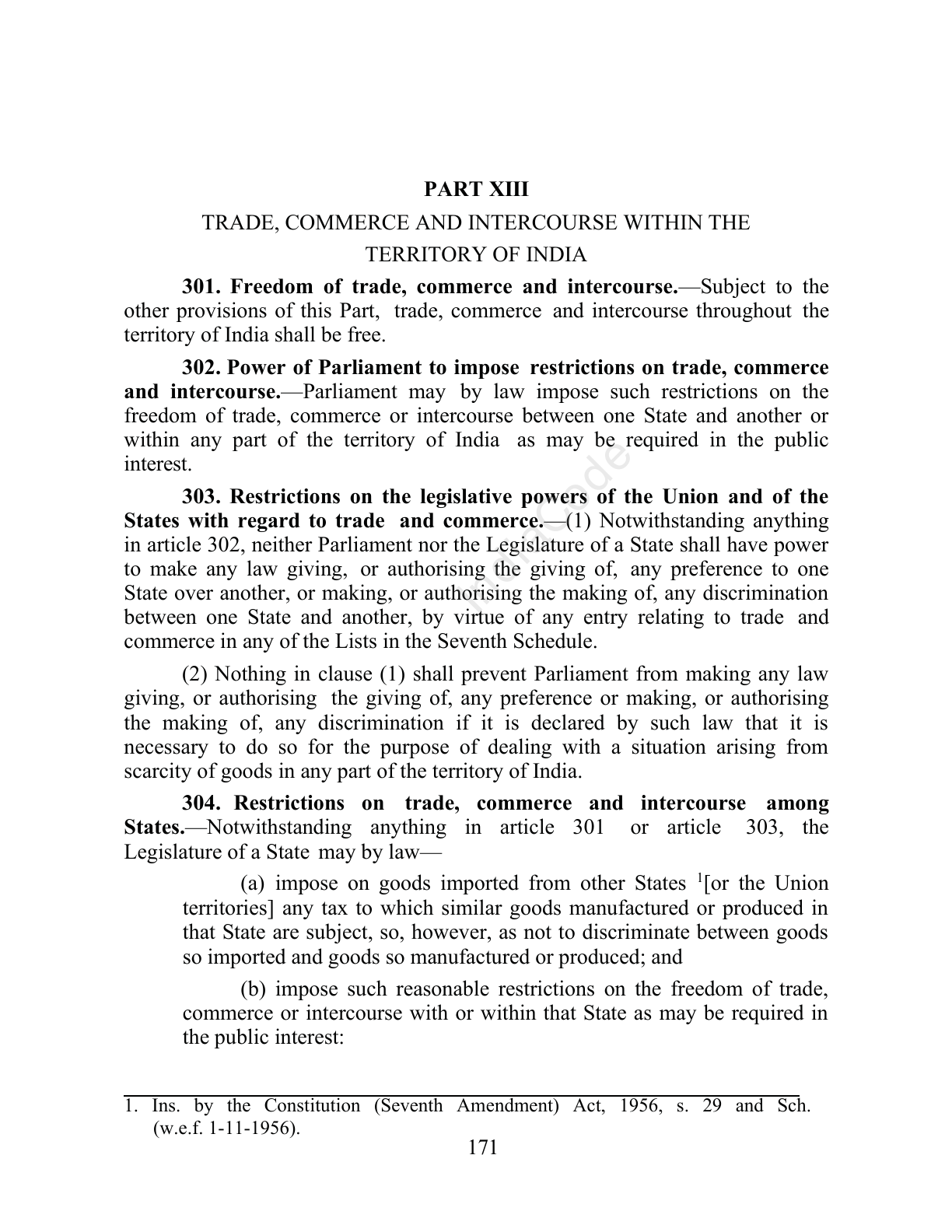
Full physical source page · unreviewed extraction
The Constitution of India in English 2026: page 202
The Constitution of India in English 2026, India Code delivered snapshot ed1820c0a1100c2c, physical page 202, typed edition 223d395df4de00897c78a4c0a752b32348d86f7c4f7013254fd4e03da46ceca0. Unreviewed extraction.
Source: official India Code PDF · catalog record. Fetched 2026-10-19T23:32:36Z. SHA-256 ed1820c0a1100c2c6aa8ece835a8c8a60f996ae7eba30cc1798233683c66cfba.
Legal currency, territorial applicability and extraction fidelity are unverified. Catalog checksum/size differs from the delivered PDF; both identities are retained. Articles, Schedule/appendix material and source footnotes share these physical pages. Compare the full original image.
Source cover/preface date: 10th September, 2026. Preface amendment statement: Constitution (One Hundred and Sixth Amendment) Act, 2023. Embedded PDF title: Constitution of India_ 20 MAY 2026 (final).pdf. These are distinct source labels, not currentness or commencement approval.
Retained layout text
                                  PART XIII
          TRADE, COMMERCE AND INTERCOURSE WITHIN THE
                              TERRITORY OF INDIA
        301. Freedom of trade, commerce and intercourse.—Subject to the
other provisions of this Part, trade, commerce and intercourse throughout the
territory of India shall be free.
        302. Power of Parliament to impose restrictions on trade, commerce
and intercourse.—Parliament may by law impose such restrictions on the
freedom of trade, commerce or intercourse between one State and another or
within any part of the territory of India as may be required in the public
interest.                                            e
                                                od
        303. Restrictions on the legislative powers of the Union and of the
States with regard to trade and commerce.—(1) Notwithstanding anything
                                             aC
in article 302, neither Parliament nor the Legislature of a State shall have power
to make any law giving, or authorising the giving of, any preference to one
                                        di
State over another, or making, or authorising the making of, any discrimination
                                     In
between one State and another, by virtue of any entry relating to trade and
commerce in any of the Lists in the Seventh Schedule.
        (2) Nothing in clause (1) shall prevent Parliament from making any law
giving, or authorising the giving of, any preference or making, or authorising
the making of, any discrimination if it is declared by such law that it is
necessary to do so for the purpose of dealing with a situation arising from
scarcity of goods in any part of the territory of India.
        304. Restrictions on trade, commerce and intercourse among
States.—Notwithstanding anything in article 301 or article 303, the
Legislature of a State may by law—
                (a) impose on goods imported from other States 1[or the Union
        territories] any tax to which similar goods manufactured or produced in
        that State are subject, so, however, as not to discriminate between goods
        so imported and goods so manufactured or produced; and
                (b) impose such reasonable restrictions on the freedom of trade,
        commerce or intercourse with or within that State as may be required in
        the public interest:


1. Ins. by the Constitution (Seventh Amendment) Act, 1956, s. 29 and Sch.
   (w.e.f. 1-11-1956).
                                       171
Compare original page image