Source appendix · Central source snapshot
STATEMENT OF OBJECTS AND REASONS
Scheduled Castes and the Scheduled Tribes (Prevention of Atrocities) Act, 1989 · source PDF pages 20
This explanatory source appendix is not presented as an operative provision.
Source citation: STATEMENT OF OBJECTS AND REASONS, Scheduled Castes and the Scheduled Tribes (Prevention of Atrocities) Act, 1989 (Act No. 33 of 1989), Source appendix, Central source snapshot, source PDF pp. 20; snapshot SHA256 ee5a4fc8c8f5afbd0c514a7ed87ed050ba635edf54f7b5b8ad3f48ac6ec90ea4 (current applicability unverified)
Exact extracted layout text
Spacing, line breaks, footnotes and extraction artifacts are retained. Scroll horizontally for wide tables. Use the original page images to check columns, forms and figures; extracted text is not an accessible table model.
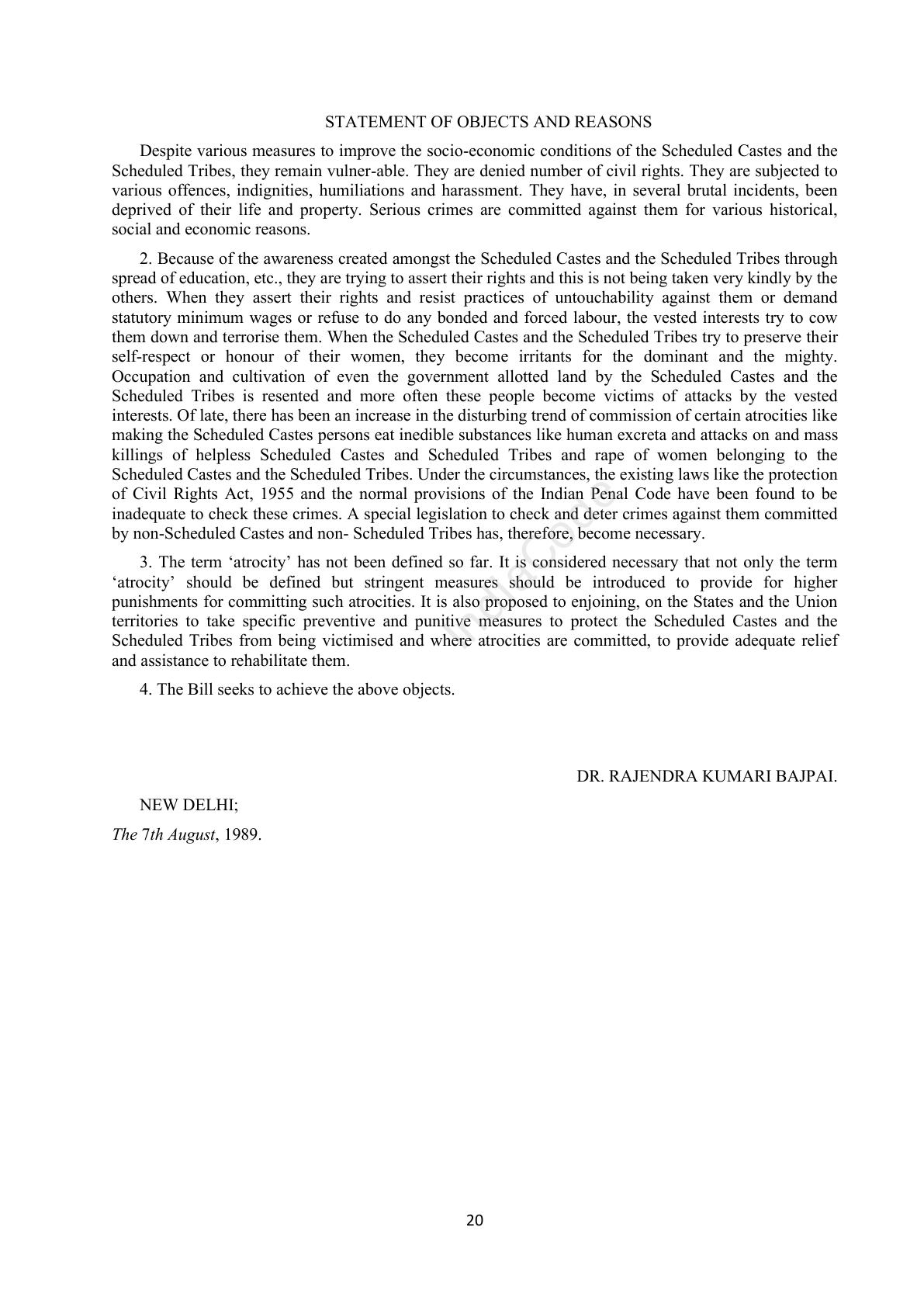
                                STATEMENT OF OBJECTS AND REASONS
    Despite various measures to improve the socio-economic conditions of the Scheduled Castes and the
Scheduled Tribes, they remain vulner-able. They are denied number of civil rights. They are subjected to
various offences, indignities, humiliations and harassment. They have, in several brutal incidents, been
deprived of their life and property. Serious crimes are committed against them for various historical,
social and economic reasons.
     2. Because of the awareness created amongst the Scheduled Castes and the Scheduled Tribes through
spread of education, etc., they are trying to assert their rights and this is not being taken very kindly by the
others. When they assert their rights and resist practices of untouchability against them or demand
statutory minimum wages or refuse to do any bonded and forced labour, the vested interests try to cow
them down and terrorise them. When the Scheduled Castes and the Scheduled Tribes try to preserve their
self-respect or honour of their women, they become irritants for the dominant and the mighty.
Oссupation and cultivation of even the government allotted land by the Scheduled Castes and the
Scheduled Tribes is resented and more often these people become victims of attacks by the vested
interests. Of late, there has been an increase in the disturbing trend of commission of certain atrocities like
making the Scheduled Castes persons eat inedible substances like human excreta and attacks on and mass
killings of helpless Scheduled Castes and Scheduled Tribes and rape of women belonging to the
Scheduled Castes and the Scheduled Tribes. Under the circumstances, the existing laws like the protection
of Civil Rights Act, 1955 and the normal provisions of the Indian Penal Code have been found to be
                                                                      e
inadequate to check these crimes. A special legislation to check and deter crimes against them committed
                                                                od
by non-Scheduled Castes and non- Scheduled Tribes has, therefore, become necessary.
     3. The term ‘atrocity’ has not been defined so far. It is considered necessary that not only the term
                                                           aC
‘atrocity’ should be defined but stringent measures should be introduced to provide for higher
punishments for committing such atrocities. It is also proposed to enjoining, on the States and the Union
                                                      di
territories to take specific preventive and punitive measures to protect the Scheduled Castes and the
                                                In
Scheduled Tribes from being victimised and where atrocities are committed, to provide adequate relief
and assistance to rehabilitate them.
    4. The Bill seeks to achieve the above objects.


                                                                       DR. RAJENDRA KUMARI BAJPAI.
    NEW DELHI;
The 7th August, 1989.


                                                      20
Original source pages
Expand a page to inspect it. Page numbers refer to physical PDF pages. Full pages can include neighbouring central text or notes outside this extract.
Source details and verification limits
Official source PDF · fetched 2026-10-19T23:07:29Z
- PDF SHA256
- ee5a4fc8c8f5afbd0c514a7ed87ed050ba635edf54f7b5b8ad3f48ac6ec90ea4
- Excerpt SHA256
- 28b26d52d7a413b2f1fa837529179465ad829b03e04c165a542cae3445533132
- Record ID
- sc-st-act:source_appendix:statement-of-objects-and-reasons
- Extraction
- pdftotext-layout
- Layout-text retains source tables and footnotes; figures and visual fidelity require the official PDF.
- Statement of objects and reasons is explanatory source material, not an operative provision.
- Official delivered PDF bytes are pinned by SHA256; they differ from catalog checksum/size metadata. The discrepancy cause is unconfirmed.